UHR Payslip Kenya 2026: Your Definitive Guide to Access & Understanding
Navigating your monthly earnings is crucial for financial planning and securing your future. In Kenya, for many public sector and parastatal employees, the Unified Human Resources (UHR) Self-Service Portal is the gateway to your payslip. As we move further into 2026, understanding how to efficiently access, interpret, and leverage your UHR payslip is more important than ever.
This comprehensive guide is tailored for the Kenyan employee, offering clear, step-by-step instructions, expert insights, and solutions to common challenges, ensuring you master your UHR payslip with confidence.
Your UHR payslip serves as an official document detailing your earnings, deductions, and net pay. It is critical for financial applications, tax compliance, and personal budgeting. For Kenyan employees, the UHR Self-Service portal provides secure, convenient, and instant access to this vital information, reflecting the nation’s drive towards digital efficiency.
What is the UHR Payslip and Its Significance in Kenya?
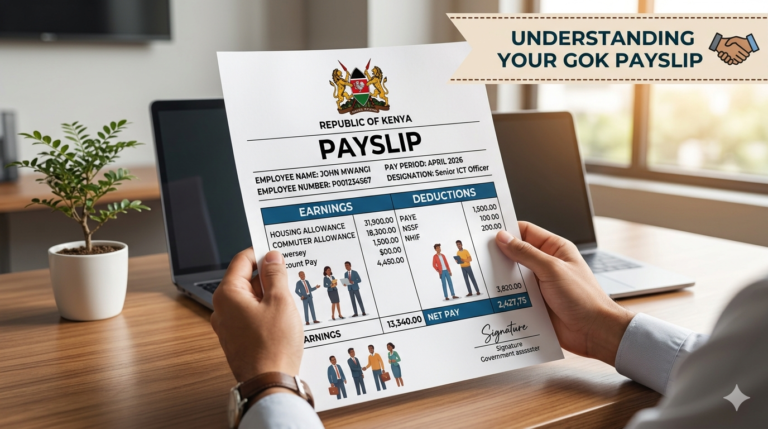
The UHR payslip is an electronic statement generated through the Unified Human Resources (UHR) system, a robust platform used by various government agencies and parastatals in Kenya. It provides a detailed breakdown of an employee’s salary components, including gross pay, allowances, statutory deductions (like PAYE, NSSF, NHIF), non-statutory deductions, and ultimately, the net pay for a given period.
Its significance cannot be overstated. In 2026, the UHR payslip remains the primary official proof of income for a vast segment of the Kenyan workforce.
Why Kenyans Need Their UHR Payslip in 2026
Beyond simply knowing your salary, the UHR payslip holds considerable weight in various aspects of a Kenyan’s financial life:
- Loan Applications: Financial institutions, including banks and Saccos, heavily rely on recent payslips to assess your creditworthiness and repayment capacity for personal loans, mortgages, or asset financing.
- Rental Agreements: Landlords often request payslips to verify a tenant’s ability to pay rent consistently.
- Tax Compliance: Your payslip details PAYE deductions, which are essential for filing accurate tax returns with the Kenya Revenue Authority (KRA).
- Proof of Employment: It serves as official documentation of your current employment status and earnings, useful for visa applications or other administrative processes.
- Budgeting and Financial Planning: Understanding your income and deductions helps you create realistic budgets and make informed financial decisions.
- Pension and Benefits: It provides a record of your NSSF and NHIF contributions, vital for tracking your social security and health benefits.
Types of UHR Payslip Access in Kenya
Primarily, UHR payslips are accessed digitally, reflecting Kenya’s commitment to paperless operations:
- Online Portal (UHR Self-Service): This is the most common and recommended method. It offers 24/7 access from any internet-enabled device.
- HR Department: In specific cases, or for employees facing persistent technical difficulties, a physical printout can be requested from their respective HR departments. However, this is increasingly becoming a fallback option.
How to Access Your UHR Payslip Online (Step-by-Step Guide)
Accessing your payslip via the UHR Self-Service portal is straightforward. Follow these steps for 2026 access:
Step 1: Navigate to the UHR Self-Service Portal
Open your web browser and enter the official UHR Self-Service portal URL provided by your employer. Ensure you are on the legitimate site to protect your data. A typical URL might look like `uhr.your-employer.go.ke/selfservice`.
Step 2: Enter Your Login Credentials
You will need your:
- Employee Number: This unique identifier is typically provided by your HR department.
- Password: This is set during your initial registration or provided by your HR.
Step 3: Access the Payslip Section
Once logged in, look for a menu item or a prominent link labeled “Payslips,” “My Payslips,” or “Salary Statements.” The interface is designed to be user-friendly.
Step 4: Select the Desired Period
You will typically see an option to select the year and month for which you want to view or download the payslip. Choose the relevant period.
Step 5: View and Download Your Payslip
Your payslip will be displayed on the screen. Most portals offer a “Download” or “Print” option, usually in PDF format. It’s advisable to download and save a copy for your records.
Understanding Your UHR Payslip: Key Components for Kenyans
A typical UHR payslip contains several sections. Understanding each ensures you can correctly interpret your earnings and deductions:
| Section | Description | Importance for Kenyans |
|---|---|---|
| Employee Information | Your name, employee number, KRA PIN, NSSF/NHIF numbers. | Ensures the payslip belongs to you and matches statutory records. |
| Gross Pay | Total earnings before any deductions, including basic salary and allowances. | Your total remuneration; forms the basis for most deductions. |
| Allowances | Specific payments for housing, travel, responsibility, etc. | Additional income streams that boost your take-home pay. |
| Statutory Deductions | PAYE (Income Tax), NSSF (Pension), NHIF (Health Insurance). | Mandatory contributions to national schemes. Essential for compliance and future benefits. |
| Other Deductions | Sacco contributions, loan repayments (employer or Sacco), union dues, advances. | Non-mandatory deductions. Crucial for managing personal debts and savings. |
| Net Pay | Your actual take-home salary after all deductions. | The amount you receive in your bank account. The most watched figure! |
Common Challenges & Troubleshooting for the UHR Payslip
Even with advanced systems, users can encounter issues. Here are common problems and their solutions:
1. Forgotten Password
- Solution: Use the “Forgot Password” or “Reset Password” link on the UHR login page. You’ll typically receive instructions via your registered email or phone number. If issues persist, contact your HR department.
2. Incorrect or Missing Payslip Information
- Solution: Immediately report any discrepancies (e.g., incorrect basic pay, missing allowances, wrong deductions) to your HR or payroll department. Keep a record of your communication.
3. Portal Access Issues (e.g., “Page Not Found”)
- Solution: Double-check the URL. Ensure your internet connection is stable. Try clearing your browser’s cache and cookies or using a different browser. If the issue persists, the portal might be undergoing maintenance; contact your IT support or HR.
4. Payslip Not Available for Current Month
- Solution: Payslips are usually uploaded after the payroll processing is complete, often a few days before or on salary payment day. If it’s significantly delayed, inquire with your HR department.
Security and Privacy: Your UHR Payslip Data in 2026
Data security is paramount, especially for sensitive financial information. The UHR system is designed with multiple layers of security protocols to protect your payslip data:
- Encrypted Connections: Ensure the portal URL starts with “https://” indicating a secure, encrypted connection.
- Strong Passwords: Always use strong, unique passwords and change them regularly.
- Two-Factor Authentication (2FA): If available, enable 2FA for an added layer of security, typically involving a code sent to your phone.
- Data Protection Act, 2019: Your personal data within the UHR system is protected under Kenyan law, mandating responsible handling and storage by employers.
Expert Tips for Maximizing Your UHR Payslip Portal
Leverage your UHR portal beyond just viewing your payslip:
Here’s a quick checklist to ensure you’re getting the most out of your UHR payslip management:
- ✔ Download and save payslips monthly.
- ✔ Review all deductions and earnings for accuracy.
- ✔ Change your password regularly.
- ✔ Explore other self-service features available.
- ✔ Back up your downloaded payslips to a secure cloud or external drive.
- ✔ Know your HR/payroll contact for inquiries.
Future Trends in Kenyan Payroll: Beyond the UHR Payslip (Linkable Asset)
As Kenya’s digital landscape evolves, so too will payroll systems. While the UHR payslip remains central, 2026 and beyond will see:
- Enhanced Integration: Seamless links between UHR and other government services like eCitizen for KRA, NSSF, and NHIF, reducing manual data entry and errors.
- AI-Powered Analytics: Systems offering employees personalized financial insights, budgeting tools, and even retirement planning based on their payslip data.
- Blockchain for Security: Potential use of blockchain technology for immutable payroll records, enhancing transparency and preventing fraud.
- Mobile-First Experience: Even more intuitive and feature-rich mobile applications for UHR access, catering to Kenya’s high mobile penetration.
- Real-time Payments: Continued advancements towards instant salary disbursements and real-time payslip generation, improving financial liquidity for employees.
These trends promise a future where managing your earnings and financial well-being through platforms like the UHR portal is even more efficient, secure, and insightful.
Frequently Asked Questions About the UHR Payslip
Q1: Can I access my UHR payslip if I’m no longer employed?
Typically, access to the self-service portal is revoked upon termination. You would need to contact your former employer’s HR department to request past payslips. It’s best practice to download all your payslips before leaving employment.
Q2: What should I do if my UHR payslip shows an incorrect deduction?
Immediately report the discrepancy to your HR or payroll department in writing (email is preferable). Provide specific details of the error and attach relevant documents if available. Follow up regularly until the issue is resolved.
Q3: Is the UHR payslip sufficient proof of income for a CRB clearance?
Yes, your UHR payslip serves as valid proof of regular income, which is a key factor assessed by financial institutions and the Credit Reference Bureaus (CRB). However, CRB clearance typically involves a credit report that reflects your borrowing history, not just income. Payslips support your ability to repay.
Q4: How far back can I access my UHR payslips online?
The system typically stores several years’ worth of payslips, often up to 5-7 years, depending on the employer’s policy and system capacity. Check your portal for the available range.
Q5: What are the main differences between gross pay and net pay on my UHR payslip?
Gross pay is your total earnings before any deductions are made. Net pay is the amount you actually receive in your bank account after all statutory and non-statutory deductions have been subtracted from your gross pay.
Conclusion
The UHR payslip remains an indispensable tool for every Kenyan employee, providing transparency and control over personal finances. By understanding how to effectively access, interpret, and troubleshoot your payslip, you empower yourself with crucial information for budgeting, financial planning, and ensuring your entitlements are correctly processed.
Embrace the digital convenience of the UHR Self-Service portal in 2026. Stay informed, stay secure, and take charge of your financial journey. For more insights into managing your finances and understanding loan applications in Kenya, learn more from our comprehensive blog.
Sources
- Kenya Revenue Authority (KRA) — Official site for tax information.
- National Social Security Fund (NSSF) — Information on NSSF contributions and benefits.
- National Hospital Insurance Fund (NHIF) — Details on health insurance contributions.
- Data Protection Act, 2019 (Kenya) — Information on data privacy laws.